Problem
A technology platform without a brand to match
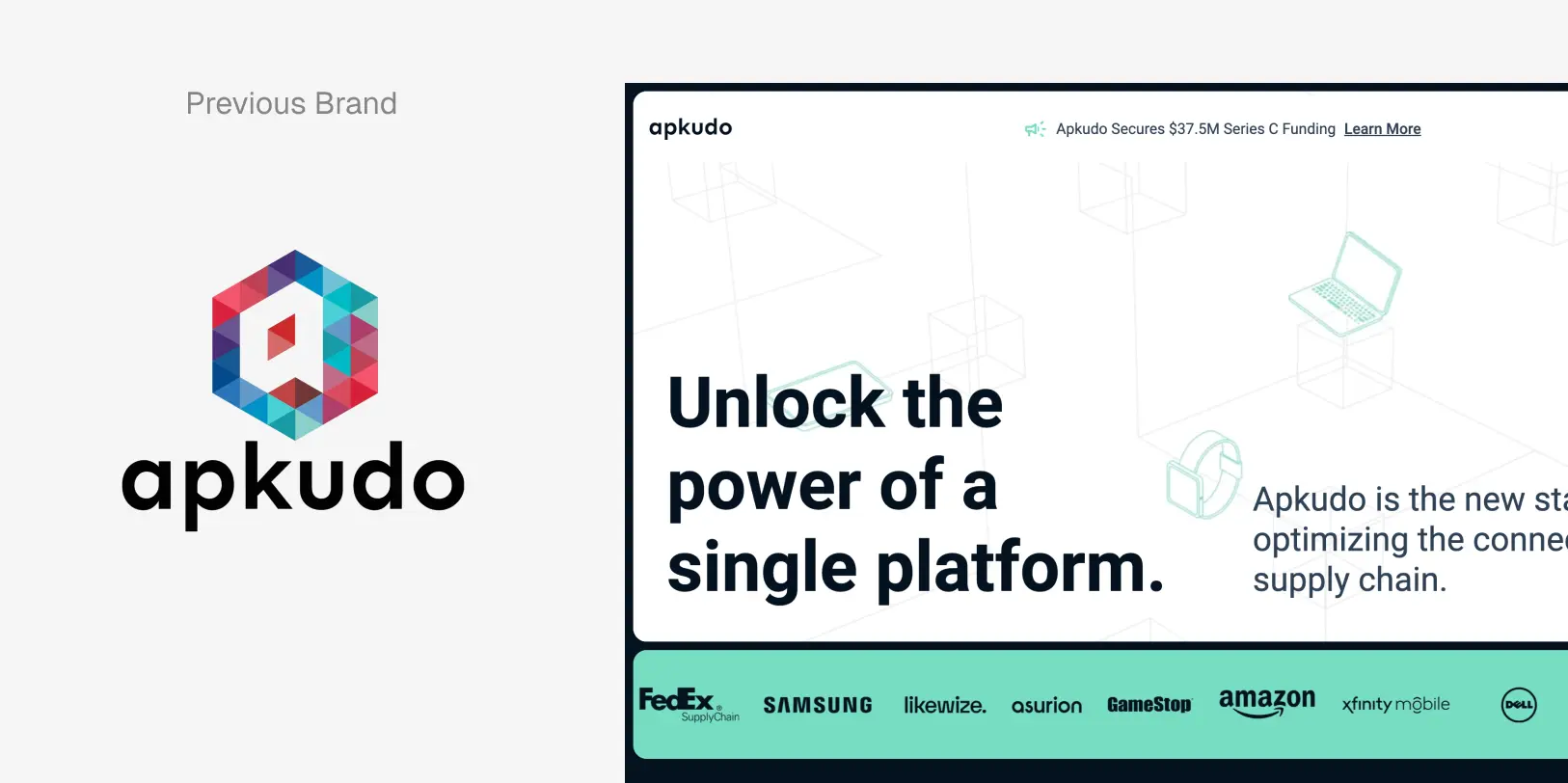
Apkudo was refining its messaging and preparing for growth, but its brand did not reflect the sophistication of its technology. The identity felt provisional, marketing materials lacked cohesion, and design execution relied heavily on outsourced support. The brand needed clarity, distinction, and a system that could scale.
opportunity
Turning a refresh into a strategic reset
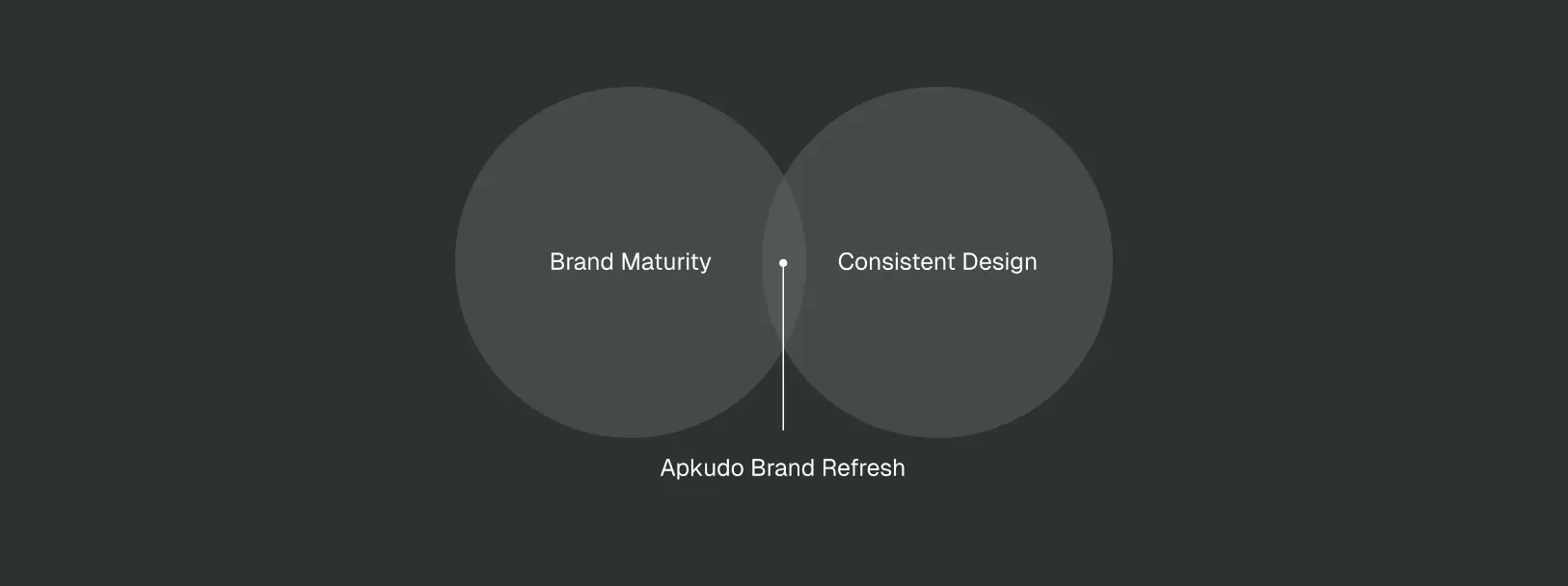
Rather than applying a surface-level refresh, I saw an opportunity to refresh Apkudo’s brand both visually and structurally. The goal was to create a brand foundation that matched the maturity of the product while enabling faster, more consistent execution across teams.
Solution
Building a brand defined by clarity and confidence
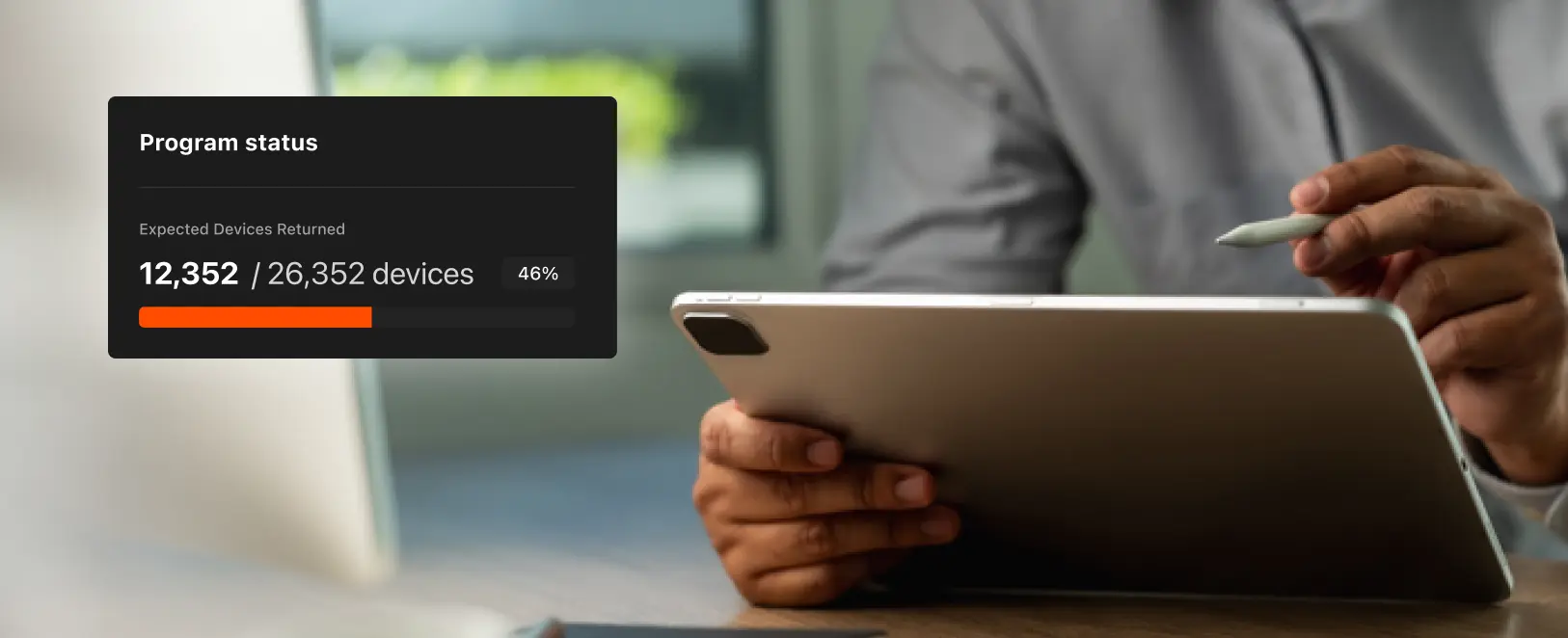
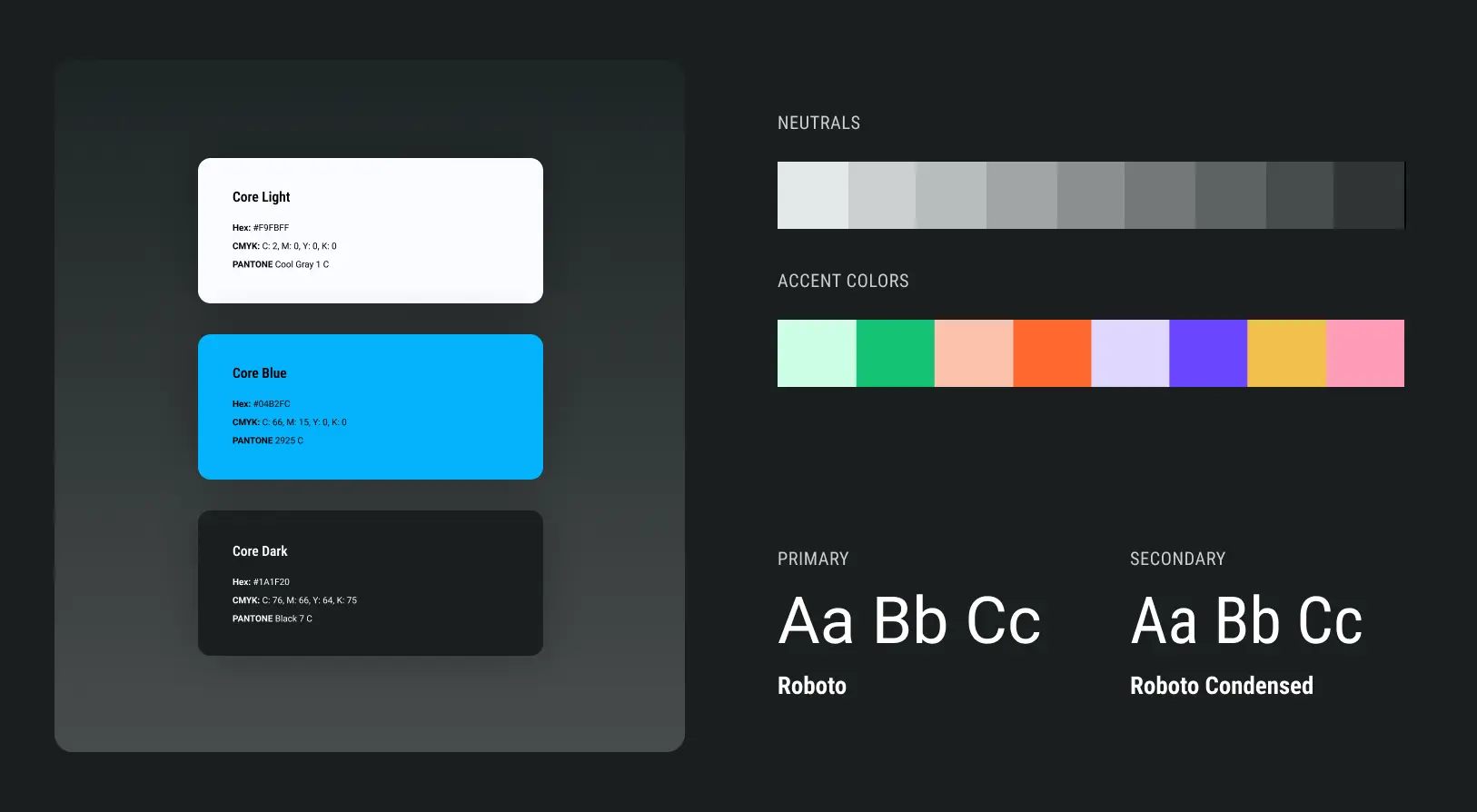
I refreshed the visual brand around clarity and confidence, introducing a more refined, high-tech aesthetic grounded in a restrained neutral palette. Intentional use of blue reinforced trust and innovation, while dark-forward layouts allowed product visuals to take center stage.
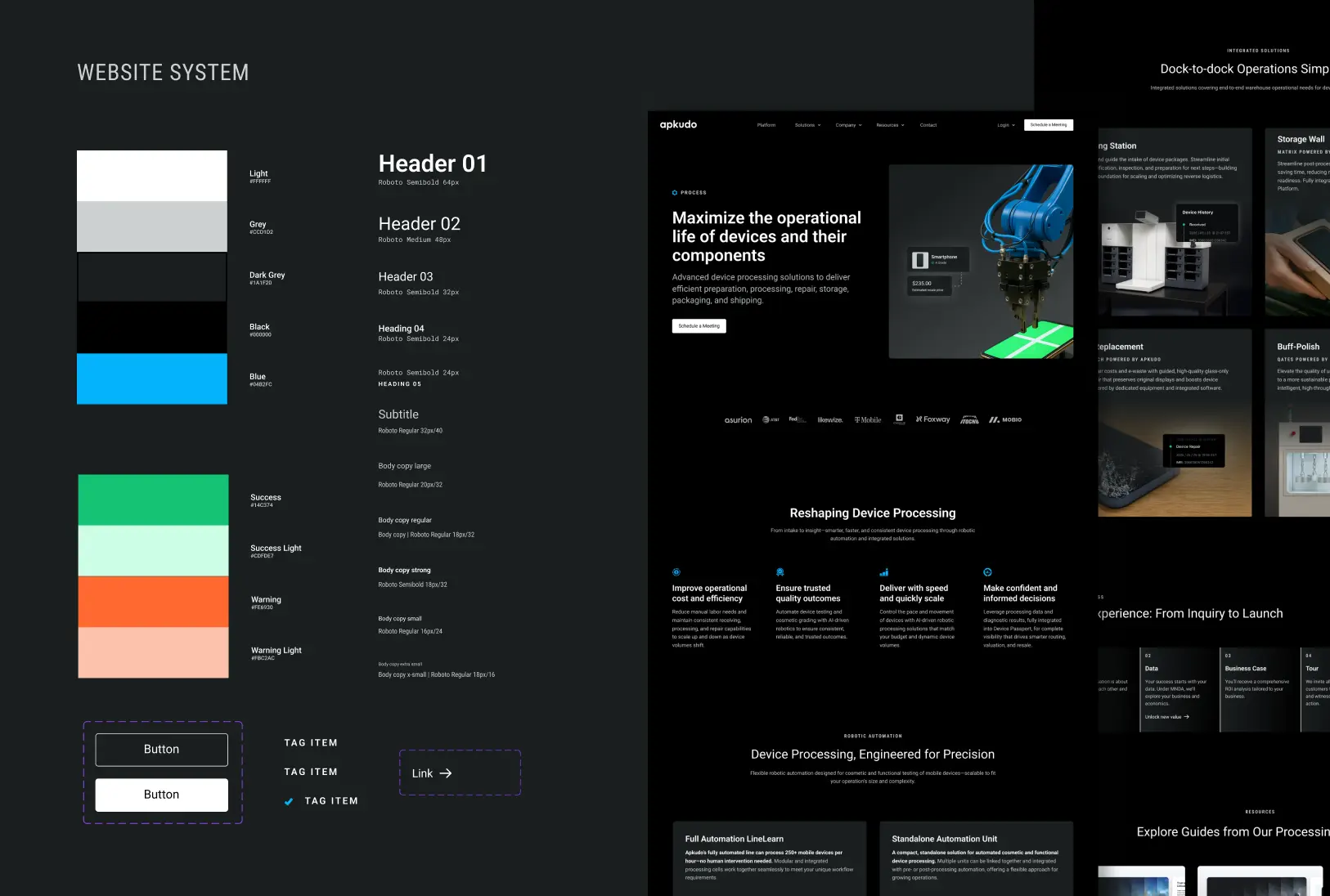
Beyond the identity, I built a modular brand system in Figma, including reusable components, templates, and structured guidelines. This shifted the team from one-off asset creation to a scalable, pattern-based workflow that supported consistent execution across web, social, and sales materials.
Brand Foundations
Expressing the device lifecycle through form
The identity began with research and competitive analysis to uncover opportunities for differentiation in a landscape of generic enterprise tech branding.
I defined six core brand descriptors—connected, futuristic, confident, simple, sophisticated, and transformative—and used them as a filter throughout logo exploration. I intentionally avoided overused lifecycle tropes such as arrows and network lines. Instead, I explored dimensional forms that could communicate movement and layered systems without visual noise.
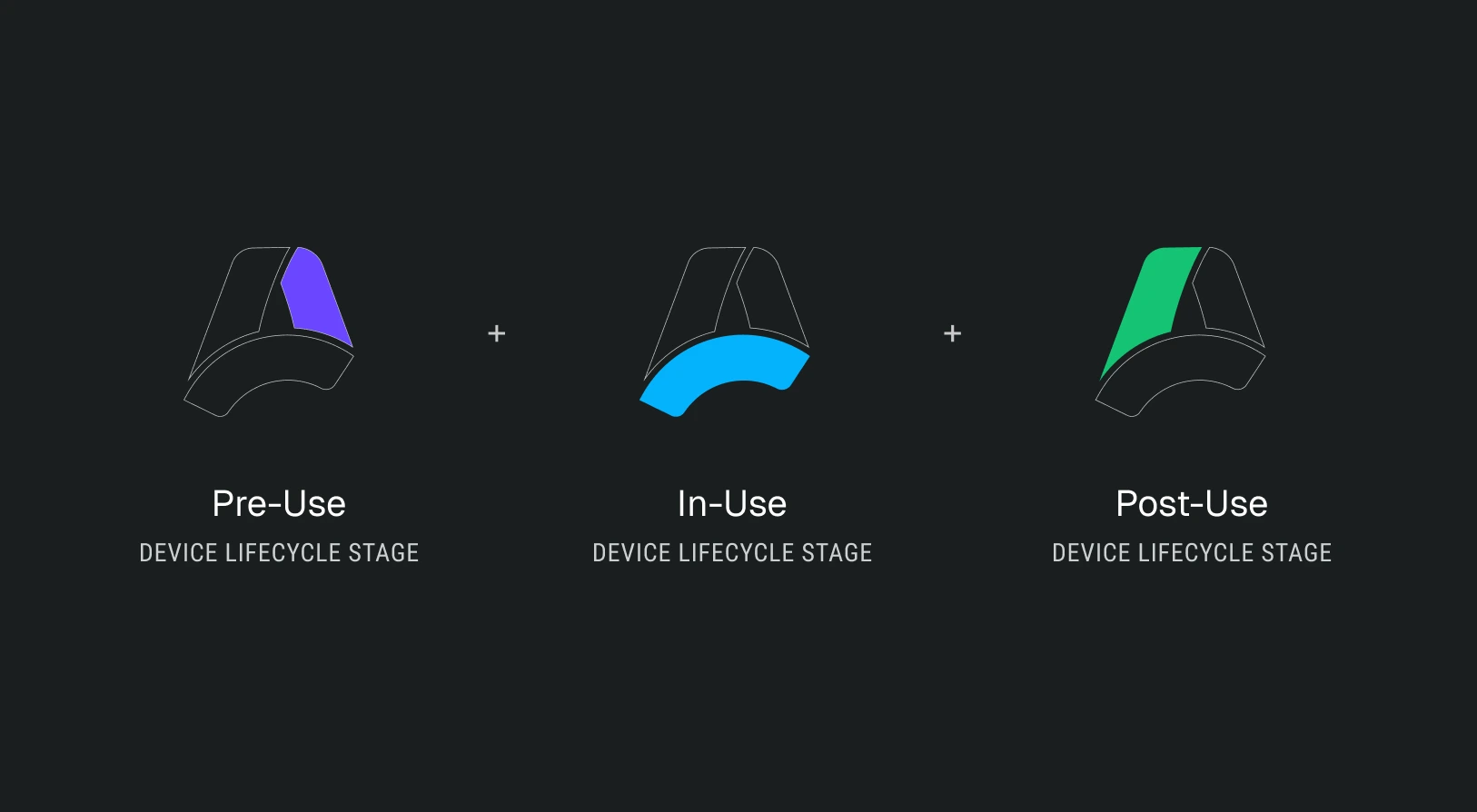
The final mark is a continuous ribbon-like form abstracting an “A,” symbolizing both Apkudo and the ongoing device lifecycle. Its segmented structure references pre-use, in-use, and post-use, expressing structured complexity in a simplified form.
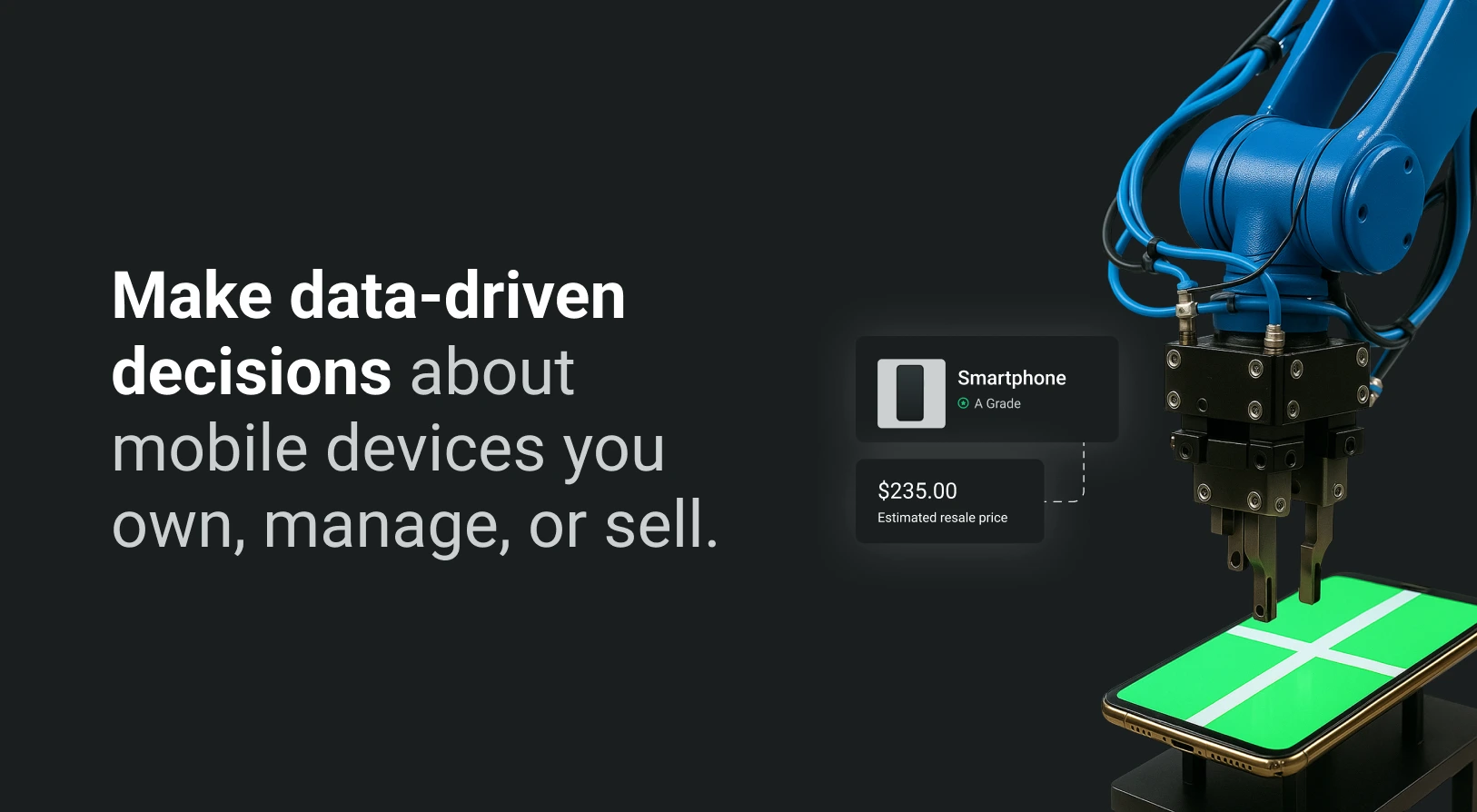
A dark neutral visual system reinforces technical confidence and clarity, creating contrast that allows UI and product imagery to stand out.


Brand System / In Use
Turning the brand into a system
To ensure the identity could scale, I translated it into a design system built primarily in Figma. I developed a centralized brand library with reusable components, layout frameworks, and visual standards to maintain consistency across channels.
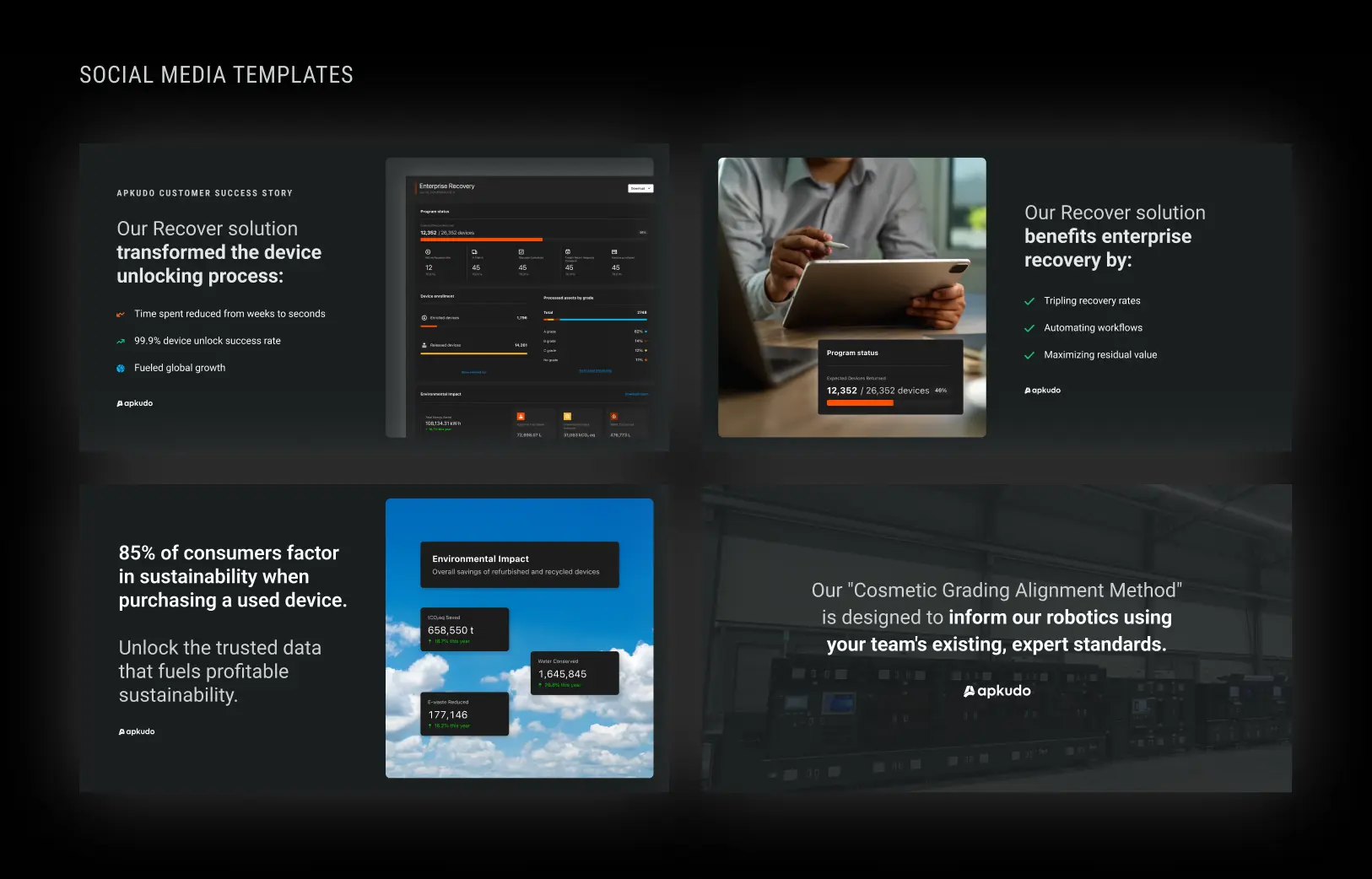
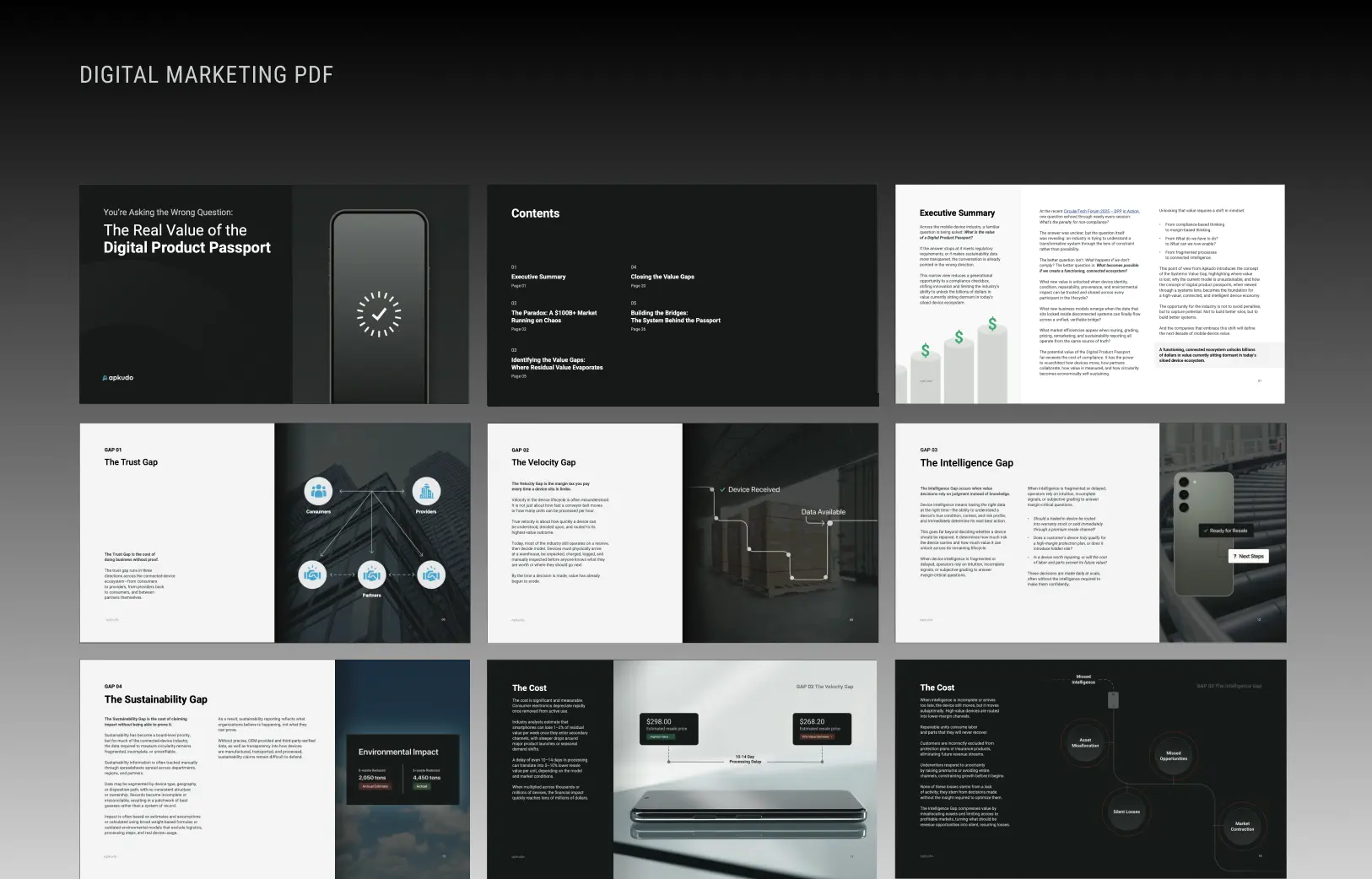
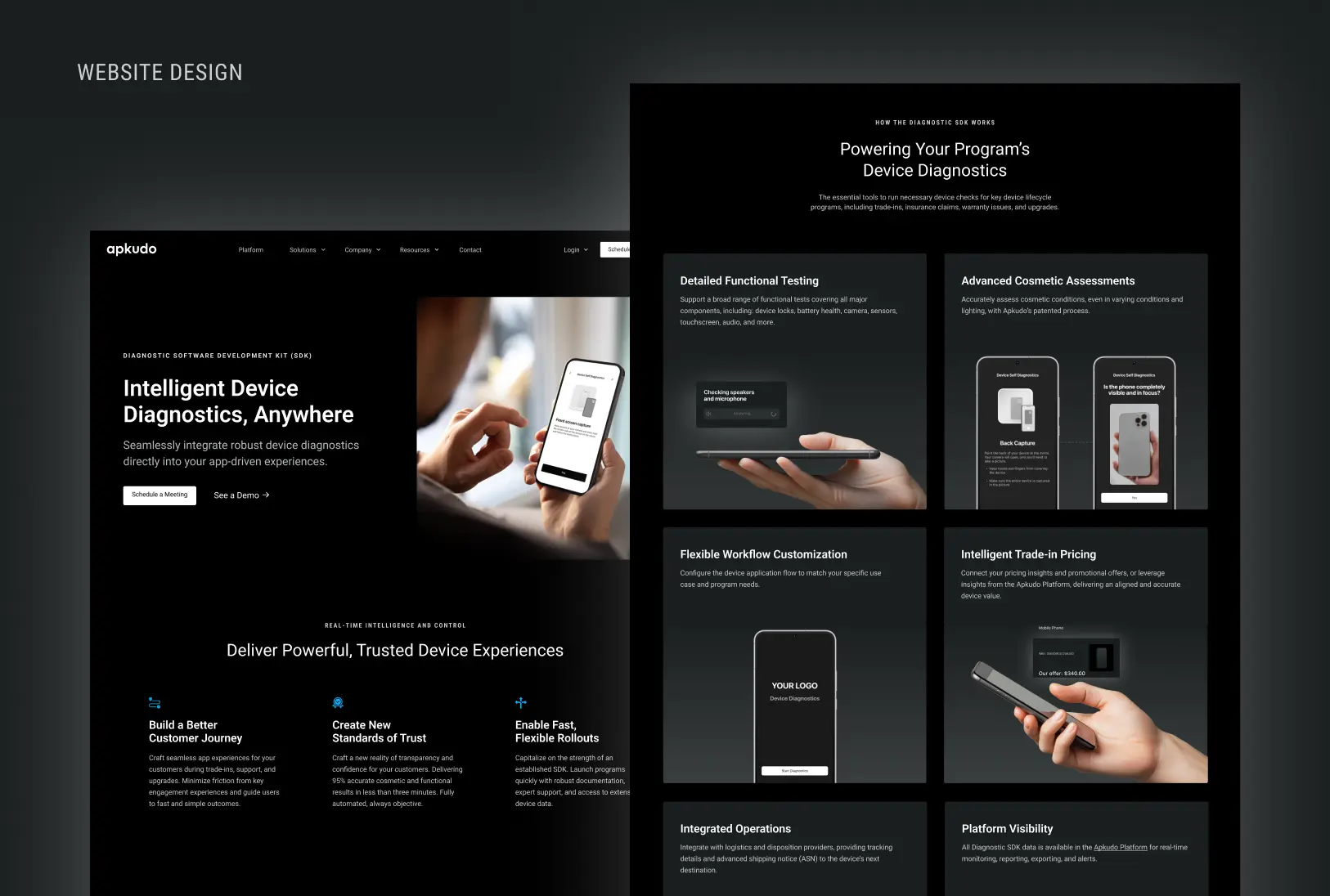
I also created structured templates for presentations, social content, and marketing materials to empower cross-functional teams to work efficiently while staying on brand. Website component libraries streamlined page builds and supported evolving content needs.The result was a flexible brand foundation that improved speed, consistency, and internal confidence across touchpoints.
Content
Website
.webp)
